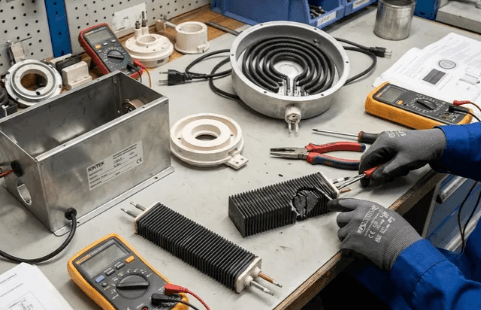
When an electric heater becomes unreliable, attention naturally turns to the element, controller, and power connections. The supporting components can also deserve investigation. A support that no longer locates the element correctly, develops damage, or is installed differently after maintenance may influence the behavior of the complete heating assembly.
Troubleshooting should proceed through observable evidence. The aim is to identify whether the support is involved, what conditions changed, and which action addresses the supported cause. Replacing every suspect item can restore operation temporarily while leaving the original problem unresolved and making later diagnosis harder.
Establish the symptom precisely
Begin by describing what the equipment does differently. Is there a visible change in element position, unusual sound, damage found during servicing, or a process performance problem? Record when the symptom appears and which operating mode is active. A precise symptom helps separate a support concern from unrelated electrical or control issues.
Heating assemblies may use supports made from Silicate ceramics, including grades selected for their electrical and thermal roles. Identify the installed part and its intended function before investigating. Do not assume that every ceramic piece in the assembly serves the same purpose or that a visually similar replacement is suitable.
Compare current conditions with the approved arrangement
Check the available assembly drawing, service history, and component identity. Look for changes in element geometry, mounting hardware, orientation, or nearby structures. A maintenance replacement can alter the arrangement even when each individual item appears reasonable. The investigation needs to compare relationships, not just part names.
Ask whether the symptom began after a specific intervention. If so, examine that work without assuming it proves the cause. The timing provides a useful lead. Records of what was removed, reused, adjusted, or replaced can help the technical team identify which differences deserve a focused check.
Inspect contacts and seating
After the equipment has been made safe through the applicable service procedure, examine how the support sits in its holder and contacts the element. Record damage, deposits, or unusual contact marks before cleaning them away. Photographs with orientation information can help the responsible engineer review the findings.
Check neighboring hardware as well as the ceramic. A distorted or contaminated seating surface may affect the support’s position. A loose retaining arrangement can create a different problem from excessive constraint. Observations should be reported as findings, with possible explanations kept separate until the investigation has enough evidence to support them.
Review the temperature sequence
The component may experience different conditions during startup, continuous heating, and shutdown. Ask whether the equipment now cycles more frequently or operates with a different load. A control setting that appears unchanged does not necessarily establish that every local component sees the same thermal history.
Where the diagnosis requires temperature information, use measurements or assessments relevant to the support’s location. Avoid assuming that an enclosure reading describes the ceramic. Record how and when the information was collected. This gives the engineering team a basis for deciding whether the operating change is significant to the support or another part of the assembly.
Check contamination and cleaning history
Deposits can reveal changes in the equipment environment or maintenance routine. Identify the likely source and whether the cleaning method changed recently. A support that accumulates material differently from previous service intervals may be experiencing a process change rather than an isolated component defect.
Review approved cleaning and replacement instructions. If staff use a different product or dismantling method in practice, document the difference for technical review. The goal is to understand actual conditions, not merely compare the part with an ideal written routine. Realistic information makes corrective actions more likely to work after the equipment returns to service.
Verify the repair against the original symptom
After a supported corrective action, confirm whether the original behavior has changed under the relevant operating conditions. Record the installed components, adjustments, and observations. If several changes were necessary at once, acknowledge that the result may not isolate the contribution of each one.
Continue monitoring where the original issue developed gradually. A successful initial run may establish basic operation without demonstrating lasting correction. Link the follow up observations to the service record so the next technician can distinguish a recurring problem from a new event. This continuity reduces repeated troubleshooting and improves future maintenance decisions.
Ceramic supports belong in a complete investigation of a heating assembly when evidence points toward their function or interfaces. Precise symptoms, verified part identity, documented contacts, and realistic thermal information help locate the cause. A repair becomes dependable when its effect is checked against the problem that prompted the work.


 By